How well do we really take care of ourselves today?
A recent Move To Happiness survey among 200 respondents in Flanders and the Netherlands paints a sharp picture of the wellbeing landscape in 2025. The results reveal a striking contrast: while confidence in the future remains surprisingly strong, a majority struggles with stress, anxiety and emotional instability.
Perhaps you recognize it yourself. You know where you want to go, yet the path toward it feels heavier than it should.
9 out of 10 feel positive about the future
When asked about “Your Future,” participants rated themselves an average of 7.9 out of 10, the highest score across all wellbeing domains. An impressive 92% gave themselves a 7 or higher, indicating that the vast majority feel they are moving their lives in the right direction. A hopeful signal at a time when mental resilience is often under pressure. And yet.
56% struggle to mentally unwind
The lowest score in the survey went to "Mental Calm" with an average of just 4.2 out of 10. More than half of respondents (56%) rated themselves 4 or lower, indicating a structural difficulty in quieting their thoughts and releasing tension.
The same pattern appears in related domains:
- Stress management: 4.9/10 (45.5% scored ≤4)
- Emotional stability: 4.9/10 (46.5% score ≤4)
- Self-compassion: 4.9/10 (49% score ≤4)
These scores remain well below what would be considered a healthy baseline.
In other words, most people know where they want to go, but struggle to find calm along the way.
The biggest challenge? Stress and self-confidence
The biggest wellbeing challenges, turn out to be:
- 40% Stress and emotional overstimulation
- 23% Lack of self-confidence and authenticity
- 20% Burnout & chronic fatigue
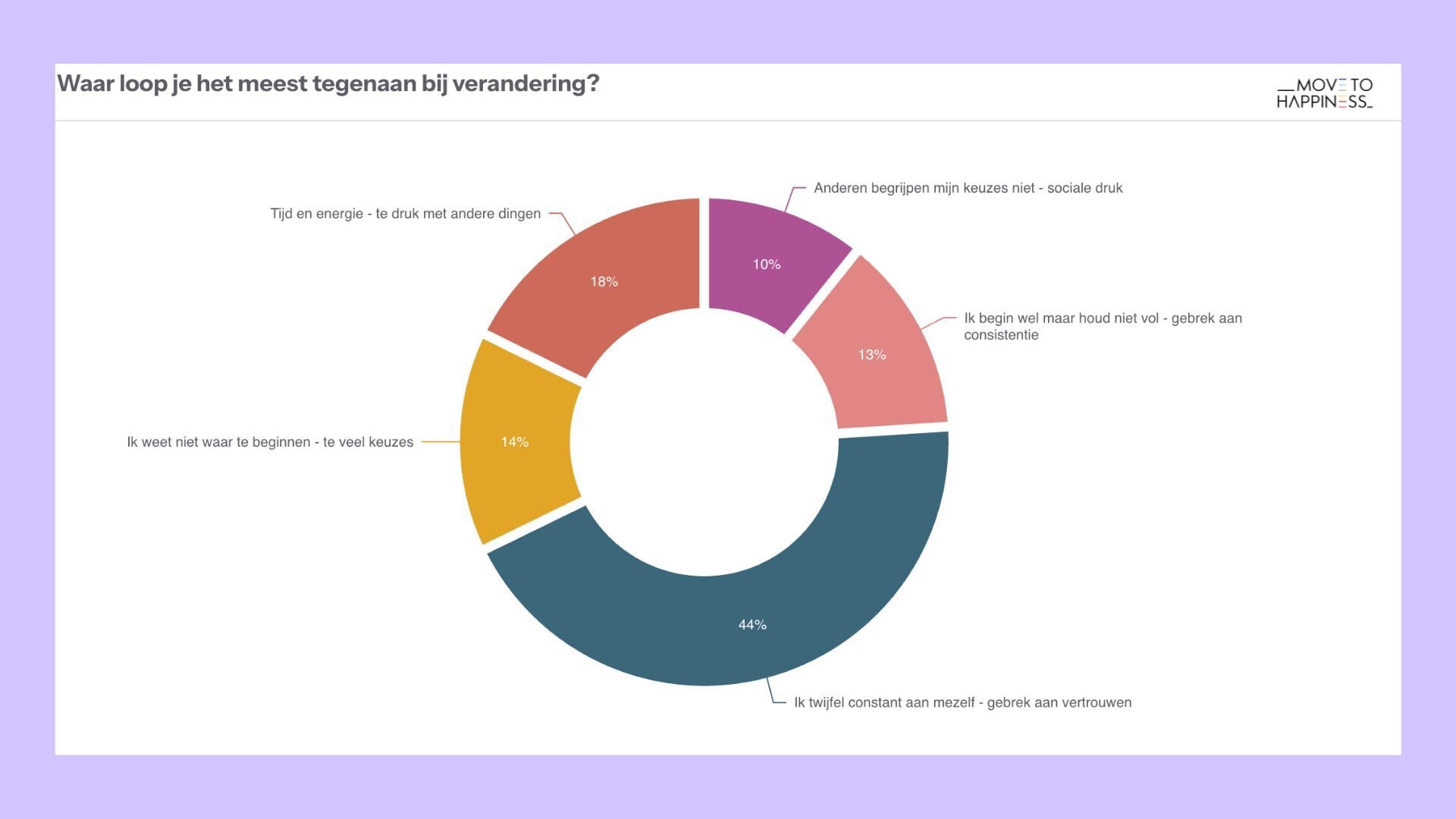
And what holds people back from making chance?
44% indicate constant self-doubt. A lack of confidence is by far the greatest obstacle.
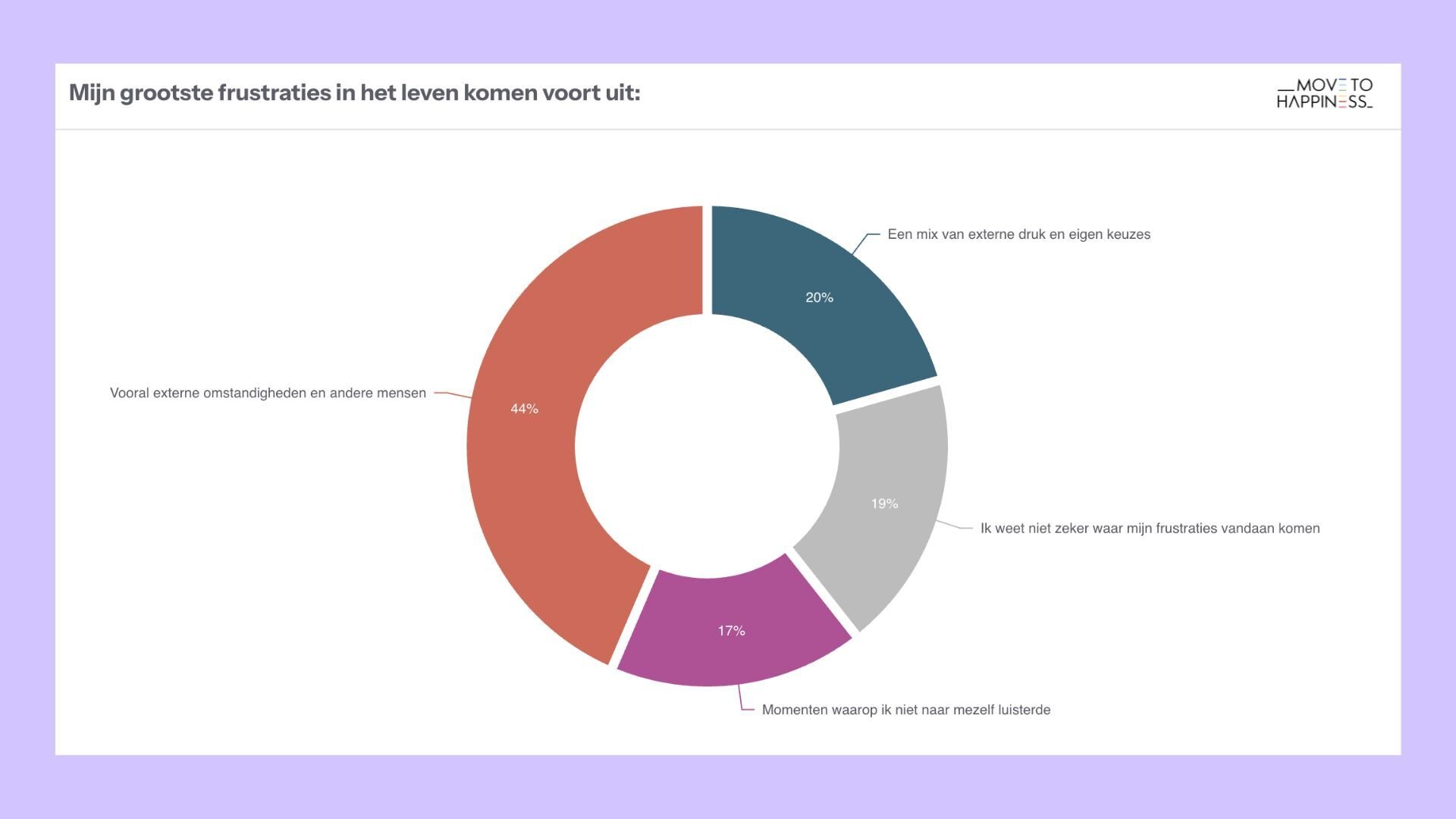
Even more striking: 44% attribute their frustrations to external circumstances or other people, while only 17% recognize that these frustrations arise from momentes when they failed to listen to themselves.
What do people really want?
The question "What would make the biggest difference in your life?" provides a clear answer:
- Emotional stability and inner peace: 39%(by far the most important)
- More energy and vitality: 23%
- Better relationships and communication: 14%
- Clear direction and goals: 13%
People are not necessarily looking for radical transformation. They are looking for peace of mind.
Almost half do not feel emotionally stable
The question "How stable do you feel?" received an average of 4.9 out of 10.
46.5% rated themselves 4 or lower, meaning nearly half of the respondents perceive themselves as emotionally unbalanced. This should be a serious signal for organizations investing in mental wellbeing. Emotional stability is, after all, the foundation of sustainable performance, healthy relationships and long-term resilience.
Physical energy and nutrition: sufficient, but not abundant
Most participants rated themselves:
- 5.4 out of 10 for physical vitality and energy
- 6.1 out of 10 for nutrition and hydration
Only 1 in 4 (25.5%) gave themselves a 7 or higher for physical vitality.
his suggests that while many feel “reasonably fit,” only a minority feel truly energized and vital. We may be getting by, but are we truly thriving?
Mental calm, emotional balance and relationships are strongly interconnected
The data reveal a powerful correlation between mental, emotional and relational wellbeing domains. In other words, those who experience mental calm also tend to feel more emotionally stable and more connected to others. This is no coincidence. Wellbeing functions as an ecosystem: when one domain improves, it reinforces the others.
Large differences between individuals
The variation in the data highlights significant individual differences. Some respondents score high on rest, focus and balance, while others score notably low. This confirms what we have long observed: wellbeing is not a one-size-fits-all journey. A personalized approach is far more effective than a generic program. What works for you may not work for your colleague. And what worked last month may feel different today.
The bottomline: hopeful in direction, vulnerable in experience
The numbers leave little room for doubt:
✅ 92% feel hopeful for the future (average score 7.9/10)
❌ 56% structurally struggle to mentally unwind (score ≤4)
❌ 47% do not feel emotionally stable (score ≤4)
❌ 49% do not give themselves enough space to make mistakes(score ≤4)
The wellbeing story of 2025 is therefore not black and white, but nuanced: confident about where we are heading, yet vulnerable in how we experience the journey.
What can we learn from this?
1. Well-being begins with awareness
You can't improve what you do not measure. These figures show that many people are either unaware of their own patterns, or they recognize them but do not know how to work with them.
2. Ownership is key
External programs, workshops and coaching can support progress. But lasting change only occurs when individuals take ownership of their own wellbeing. This does not mean doing everything alone. It means consciously deciding what you need and when you need it.
3. Low threshold + personalization makes the difference
73% indicate they are willing to invest only 1 to 2 hours per week in wellbeing. This means solutions must be accessible, flexible and personalized. Not intensive programs requiring 10 hours per week. Not generic workshops. But small, daily steps that fit into real life.
That's why Move To Happiness invests in developing AI buddies that help employees recognize their patterns and receive personalized guidance.
What's next.
If these numbers make one thing clear, it's this: we have the intention, but often lack the tools AND the confidence.
The good news? Those tools exist. And they are becoming increasingly accessible.
Move To Happiness is making a fundamental shift by complementing it's existing expert-led wellbeing programs with AI-driven personal coaching. The first AI wellbeing coach is now live, helping users move from intention to concrete, daily action.
Want to learn more about how AI can help you or your team move from intention to impact?
-2.png?width=169&height=80&name=37720_move-to-happiness%20(1)-2.png "37720_move-to-happiness (1)-2")






-2.png?width=1182&height=559&name=37720_move-to-happiness%20(1)-2.png "37720_move-to-happiness (1)-2")
